Bhutan Wangdue Tshechu with Good Karma Trekking
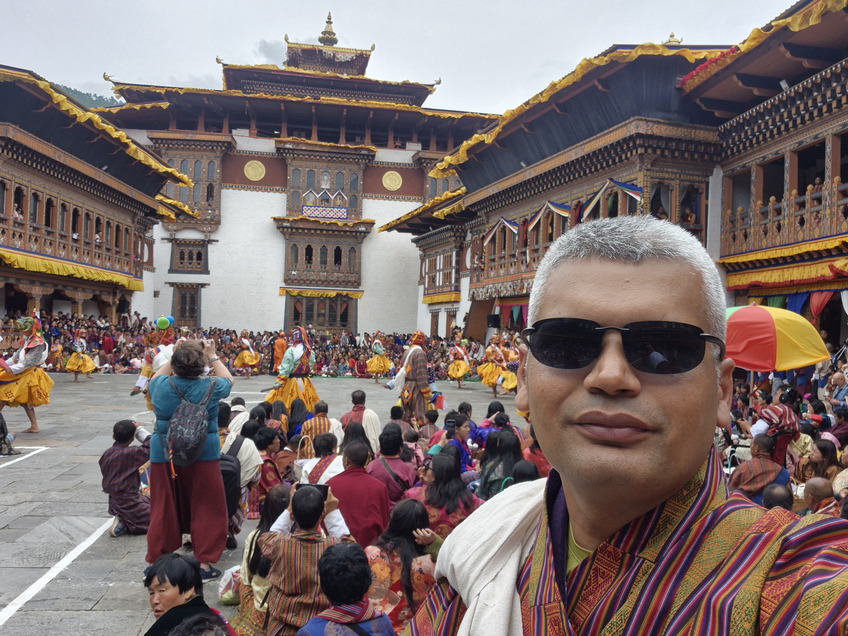
There is travel, and then there are journeys that fundamentally shift how you see the world. Last week, as the team leader for Good Karma Trekking, I had the honor of guiding a lively, adventurous group of 17 travelers across the mystical Kingdom of Bhutan. Here is the day-by-day story of our unforgettable September journey through Paro, Thimphu, and Punakha.
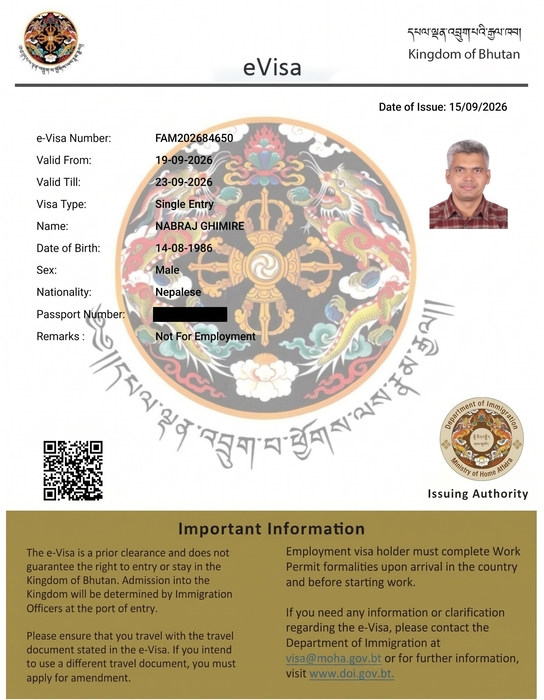
While Bhutan is captivating at any time of year, stepping into this Himalayan paradise during festival season is something else entirely. The sacred dances, the resonance of deep temple horns, the swirl of silk brocade, and the warmth of genuine smiles offer a glimpse into the living heart of Mahayana Buddhism.
Day 1: Kathmandu to Paro and the Road to Thimphu
Clear Skies, Himalayan Panoramas, and Grand Dzongs
Our expedition started before dawn in Kathmandu. With a group of 17, seamless organization is everything. Staying at the Barahi Hotel, our itinerary demanded an early start for an 08:25 flight out of Tribhuvan International Airport. At our team’s special request, the Barahi management graciously opened their 7th-floor sky deck restaurant at 05:40—nearly an hour ahead of standard hours—treating our travelers to a panoramic buffet breakfast over the waking city By running a tight schedule, we completed checkout, airport transfers, baggage drop, and security with time to spare for some last-minute pashmina shopping before boarding Bhutan Airlines.
An Approach Like No Other
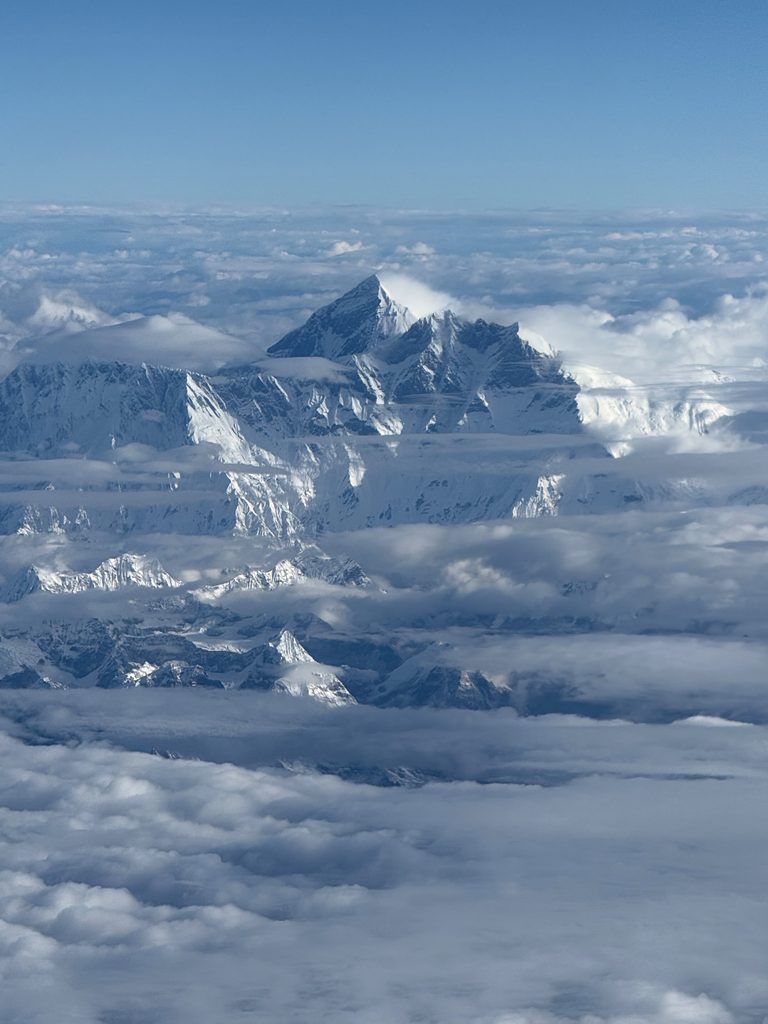
The flight between Kathmandu and Paro ranks among the most scenic aviation routes on earth. Floating above a blanket of white morning clouds, the jagged crown of Mount Everest stood sentinel outside our cabin windows as the crew served warm sandwiches, roasted peanuts, and refreshing Bhutanese juices.
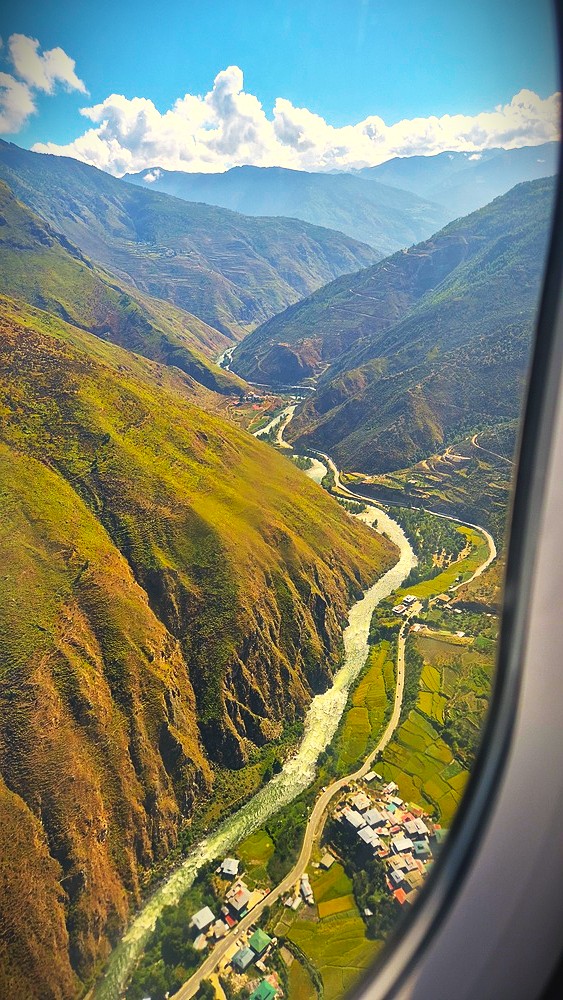
Then came the legendary descent into Paro Valley. Perched at 2,200 meters and flanked by jagged 5,500-meter peaks, Paro International Airport allows only a select handful of certified pilots to make the manual visual approach. Dropping between steep mountain ridges, the plane maneuvered gracefully through the valley gorge—a thrilling sensation not unlike spiraling down the face of a skyscraper—before touching down gently on the valley floor.
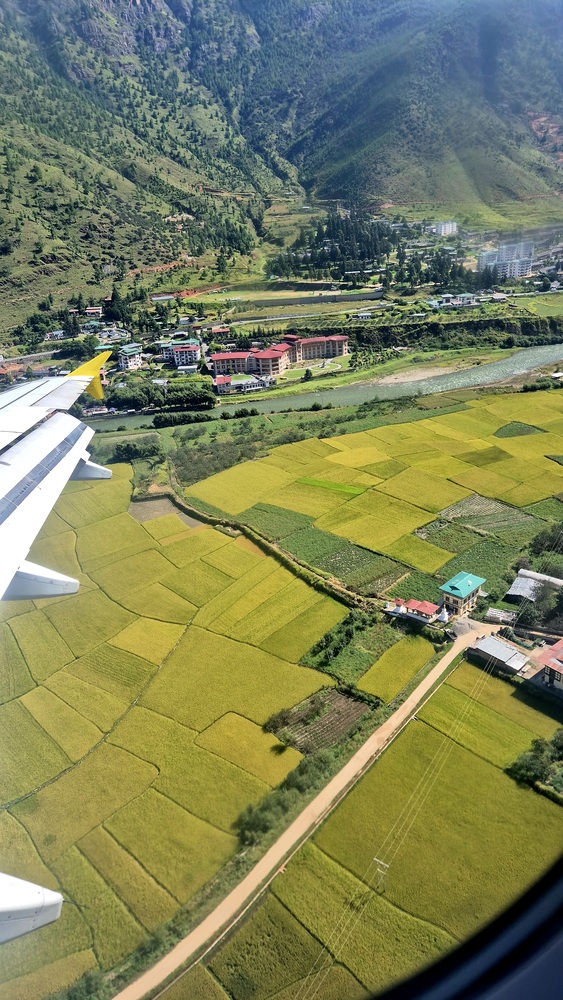
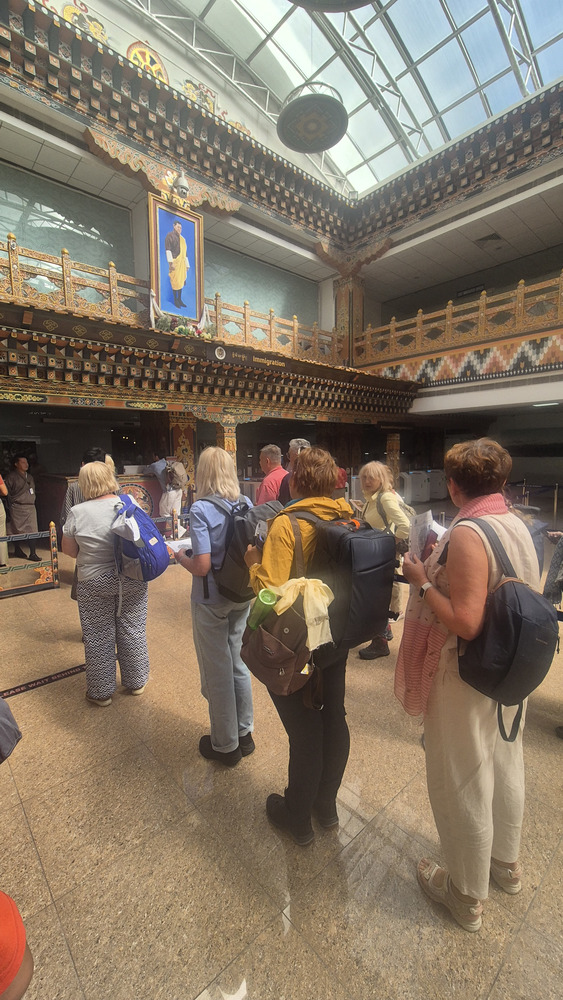
Stepping out onto the tarmac, the crisp, clean mountain air was immediate. Below us, emerald-green terraced paddy fields were just weeks away from harvest, rippling in the autumn breeze. After clearing immigration—where officers welcomed us with heartfelt warmth—our local Bhutanese partners greeted each guest with traditional white silk khatas (blessing scarves).
Discovering the Capital…
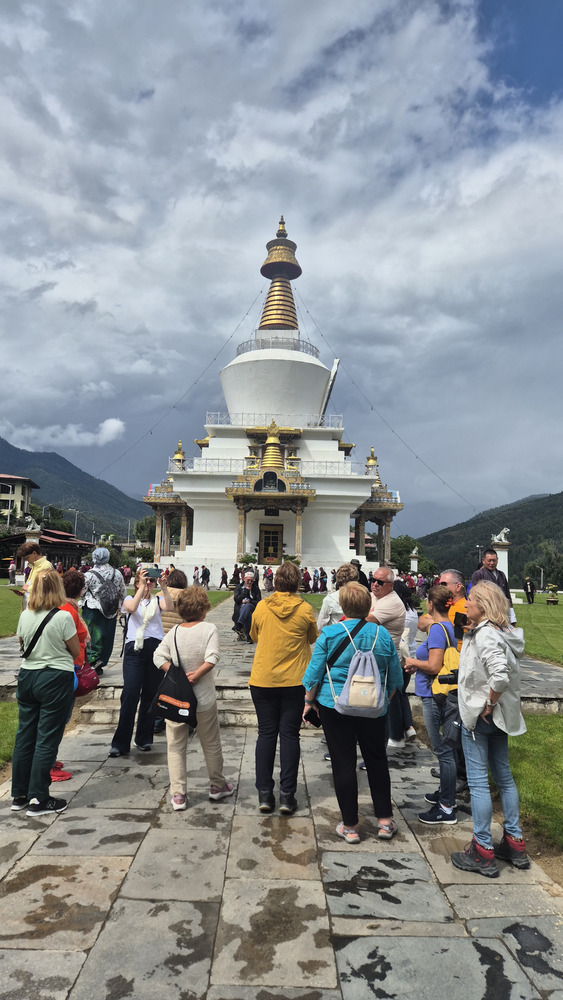
We journeyed by private coach to the capital, Thimphu. Following a hearty lunch in the city center, our cultural immersion began at the National Memorial Chorten, its golden spires gleaming as elders circumambulated the stupa spinning handheld prayer wheels. We then drove up to the colossal Buddha Dordenma (Buddha Point), where a 51-meter gilded bronze statue overlooks the southern entrance to the valley. Though minor restoration work was underway, the panoramic valley vista from the terrace was breathtaking.
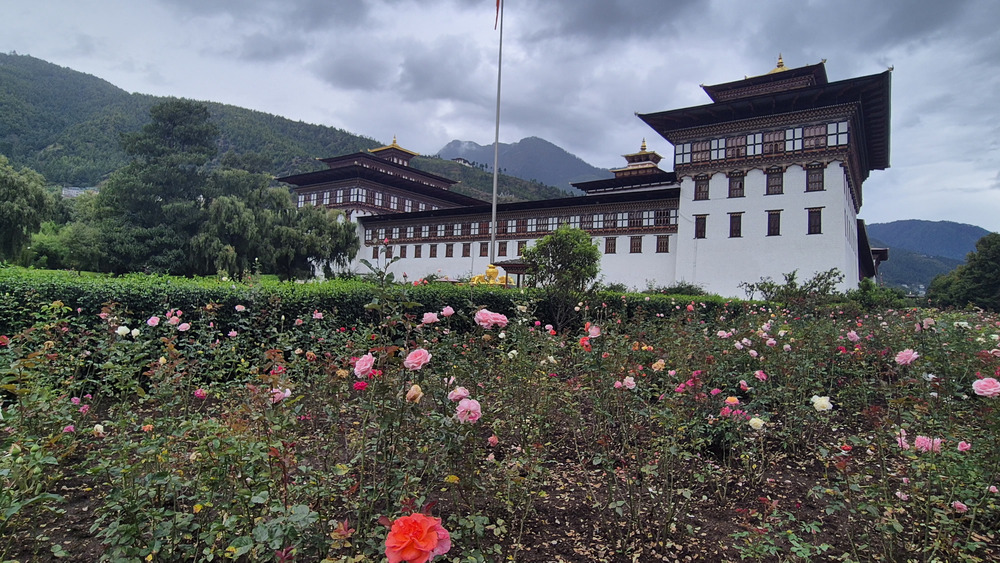
We concluded our afternoon at the regal Tashichho Dzong (“Fortress of the Glorious Religion”), the traditional seat of the civil government and the monastic body, admiring its massive whitewashed walls and multi-tiered timber roofs built entirely without nails or formal architectural blueprints.
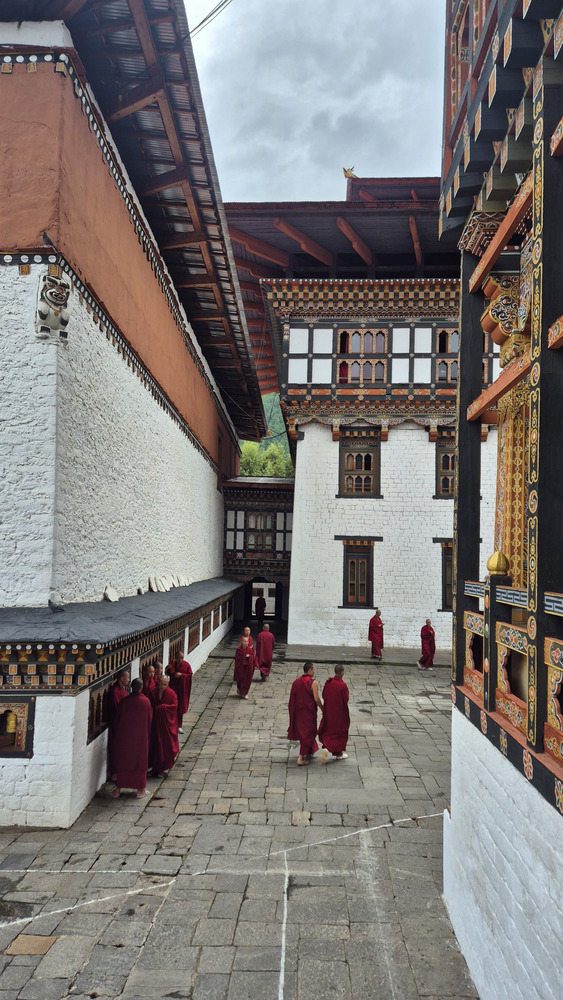
Day 2: Over the Dochula Pass to the Warm Valleys of Punakha
108 Chortens and the Whirlwind of Wangdue Tshechu
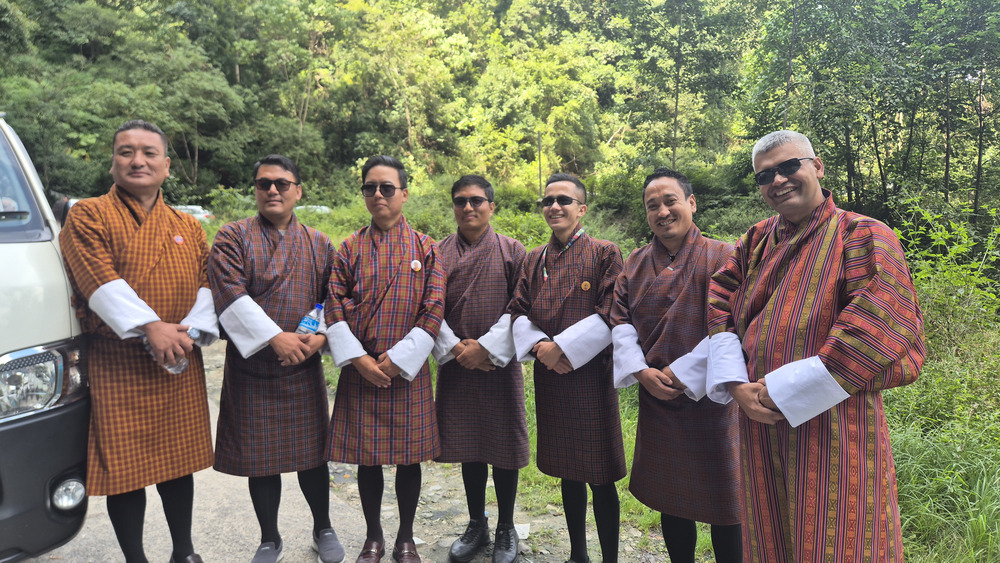
Following a restful night and breakfast in Thimphu, we set our course east toward the sub-tropical valley of Punakha via the famous Dochula Pass (3,100 m). As the mist parted, we were greeted by the iconic sight of the 108 memorial chortens (Druk Wangyal Chortens) set against the distant backdrop of snow-capped Eastern Himalayan giants.
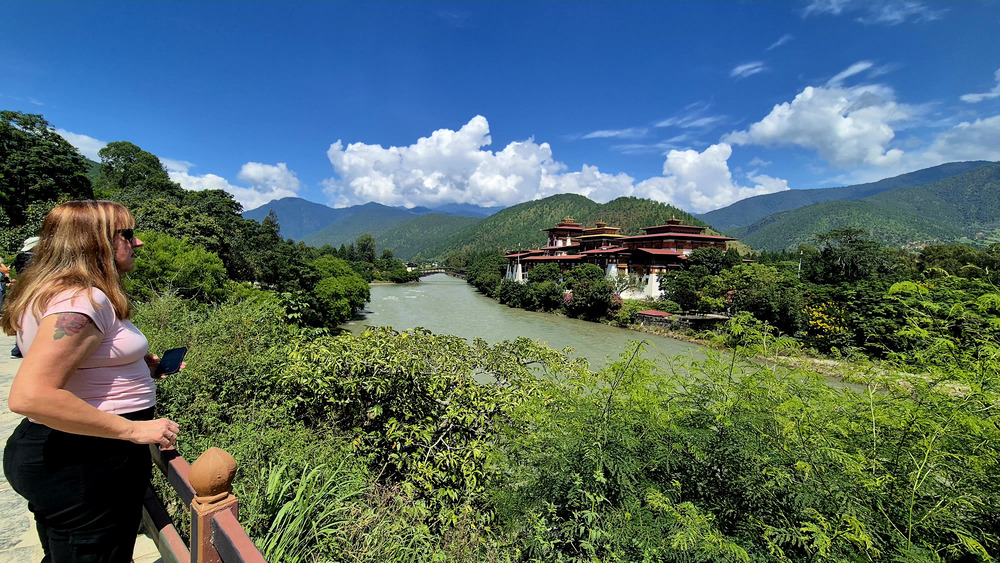
Descending toward the valley floor, we reached the magnificent Punakha Dzong (Pungtang Dechen Photrang Dzong, meaning “The Palace of Great Happiness”). Strategically built in 1637 at the scenic confluence of the Pho Chhu (father) and Mo Chhu (mother) rivers, this imposing citadel served as the ancient winter capital of Bhutan and remains the winter residence of the Je Khenpo (Chief Abbot).
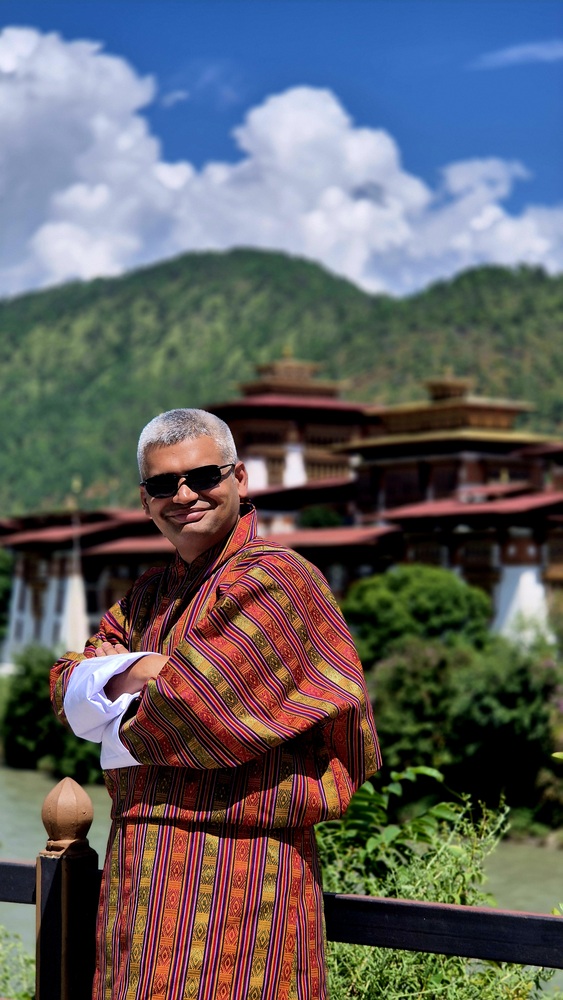
The Vibrant Energy of Wangdue Tshechu
After lunch at a local garden restaurant, we transitioned to the centerpiece of our autumn journey: the Wangdue Phodrang Tshechu.
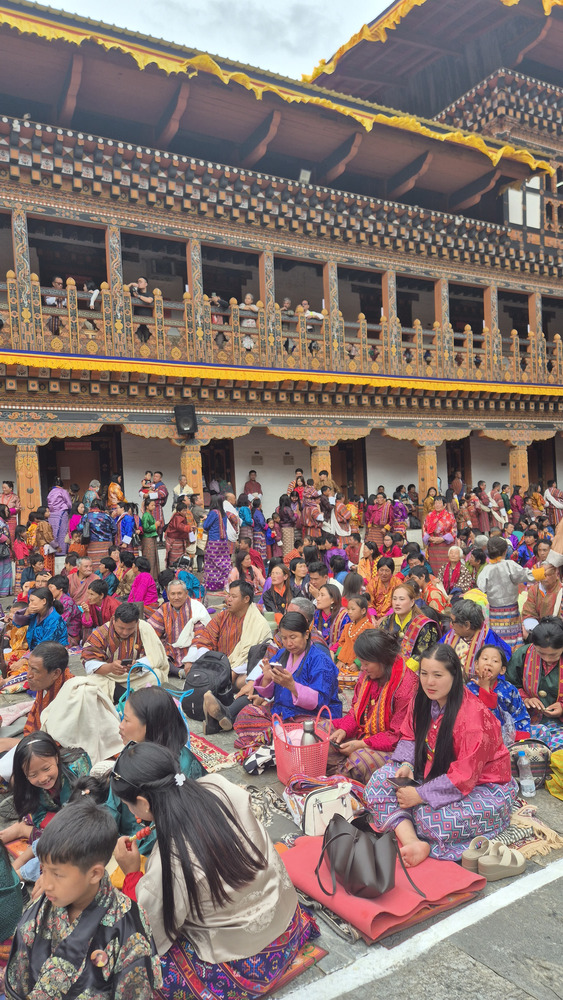
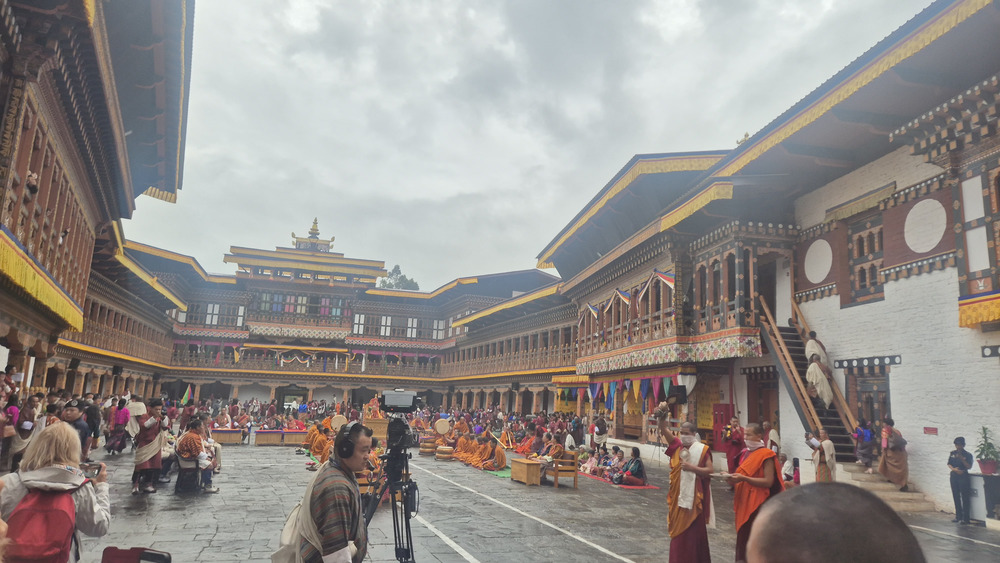
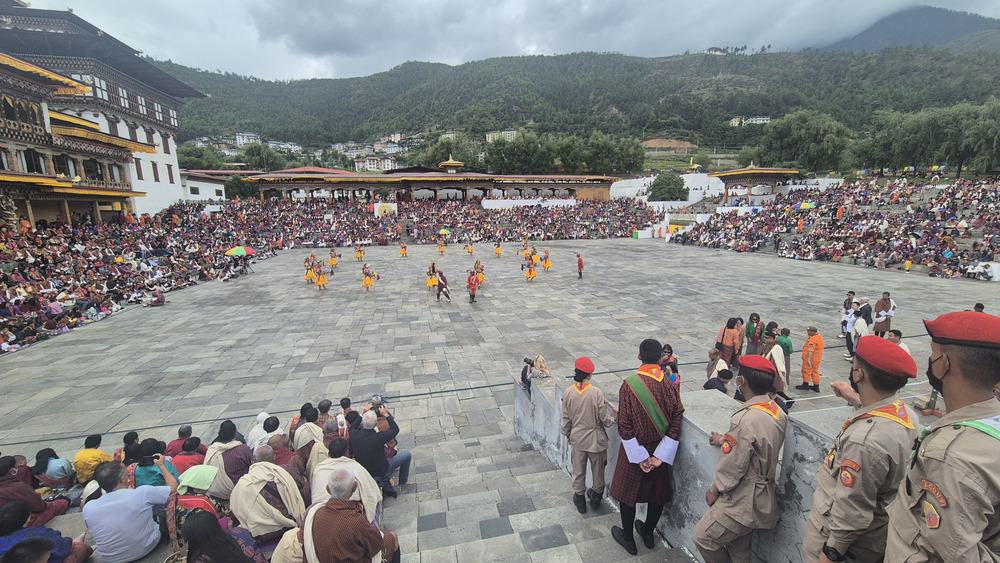
A Tshechu is an annual religious festival honoring Guru Padmasambhava (Guru Rinpoche), the precious master who introduced Tantric Buddhism to the Himalayas. We stepped into a vibrant sea of celebration. Thousands of Bhutanese families had gathered in their finest handwoven silk ghos and kiras, their jewelry catching the afternoon sun.
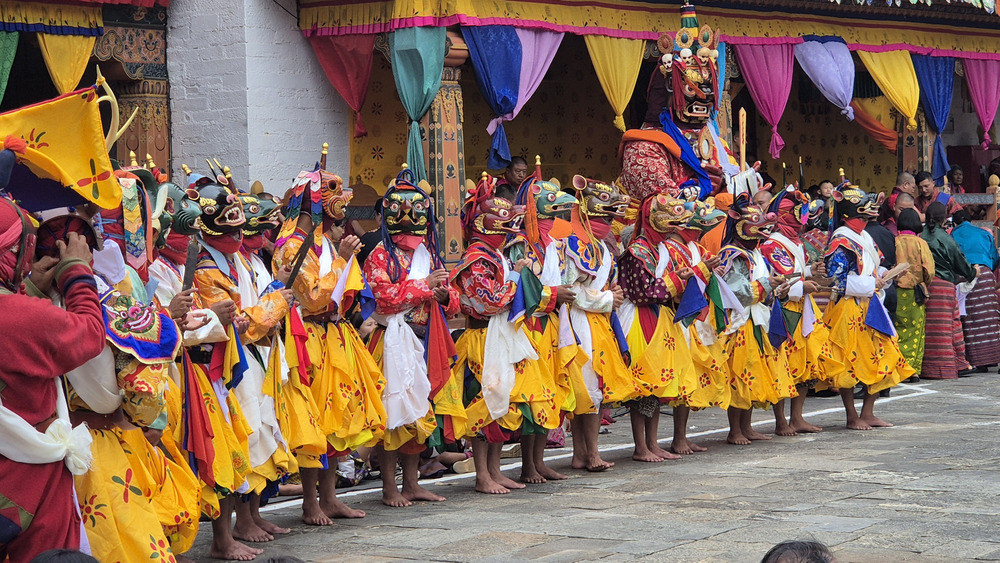
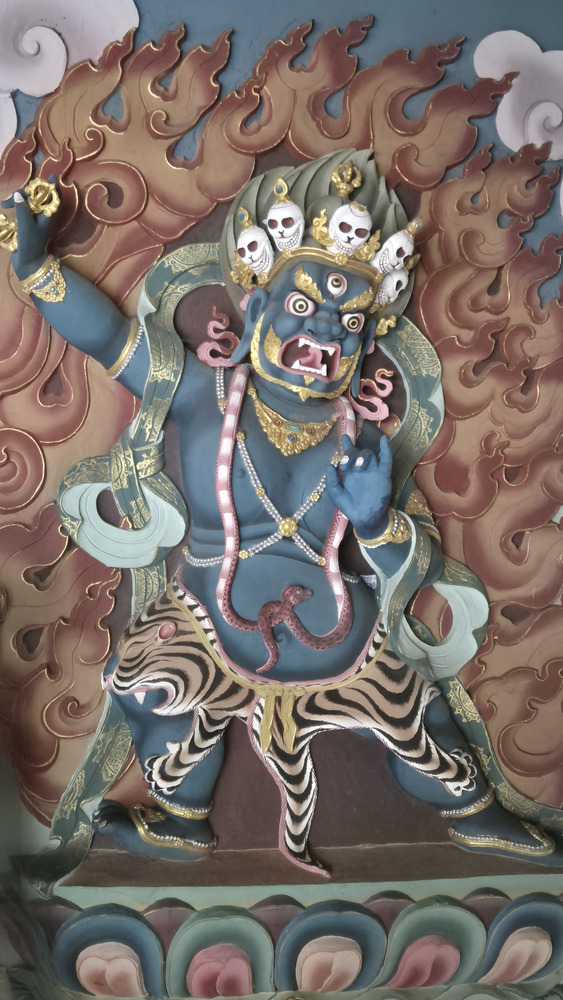
In the open stone courtyard, monks and laymen performed sacred Cham (mask dances), portraying wrathful deities, celestial beings, and enlightened protectors. The resonance of cymbals and sacred horns echoed against ancient timber galleries. For our 17 travelers, surrounded by laughter and festive picnic spreads, it was a profound window into an ancient, unbroken cultural rhythm.
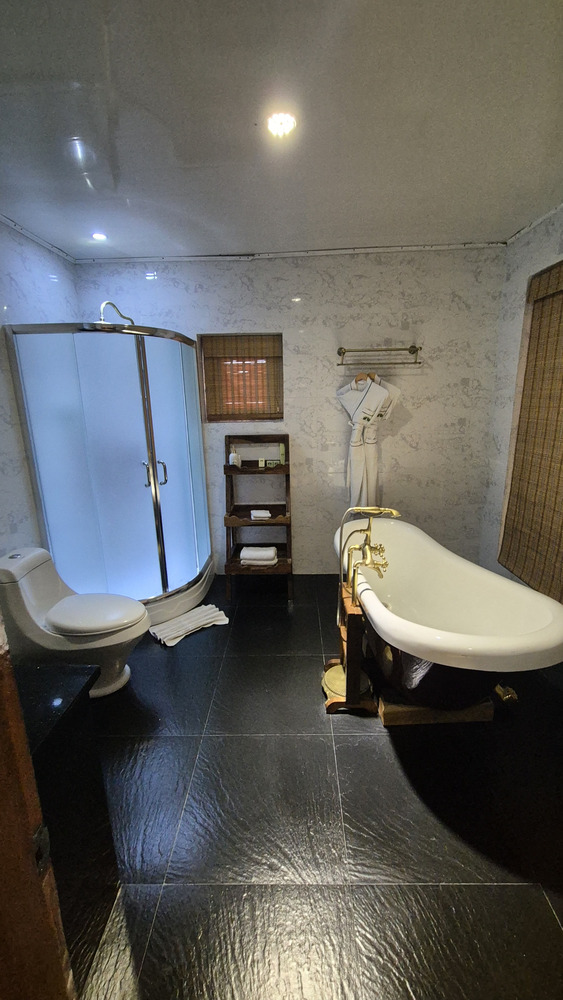
As dusk fell, we retreated to the serene RKPO Green Resort, tucked against the hills overlooking the valley. The evening buffet dinner—featuring aromatic curries crafted by their skilled culinary team—was the perfect capstone to an invigorating day.
Overnight: RKPO Green Resort, Punakha
Day 3: The Sacred Thongdrel Unfurling & the Path to Paro
Dawn Blessings and the Fertility Temple
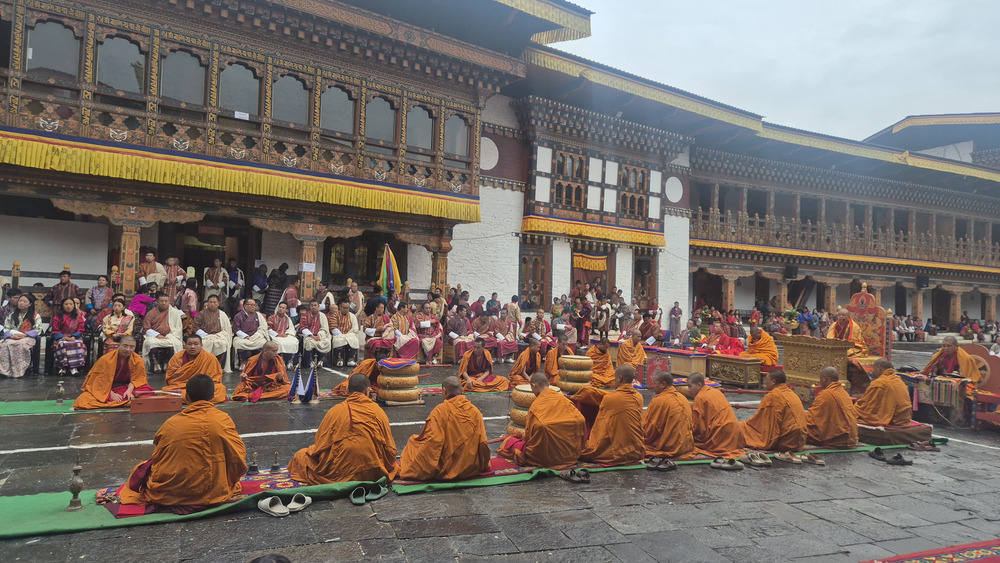
Our morning began well before first light. At 05:30, we returned to the festival grounds for one of the most auspicious spiritual events in the Buddhist world: the unfurling of the sacred Guru Tshengye Thongdrel.
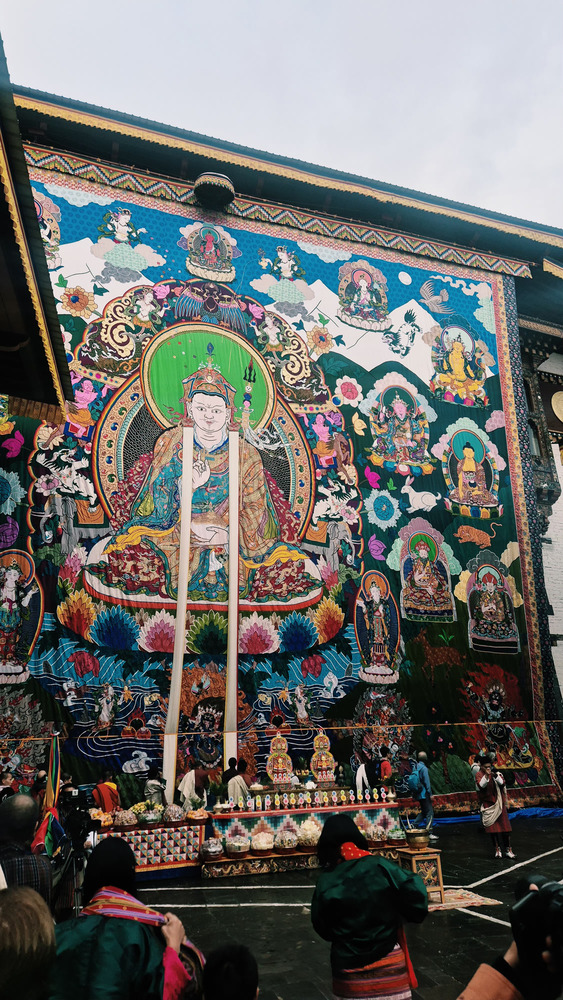
This enormous embroidered silk applique scroll depicts the Eight Manifestations of Guru Rinpoche. Tradition holds that merely gazing upon a consecrated Thongdrel cleanses a lifetime of negative karma and bestows merit (thongdrel literally means “liberation upon sight”). Standing silently alongside local devotees in the pre-dawn mountain air as the giant tapestry was slowly unrolled down the temple facade was a rare, deeply moving privilege.
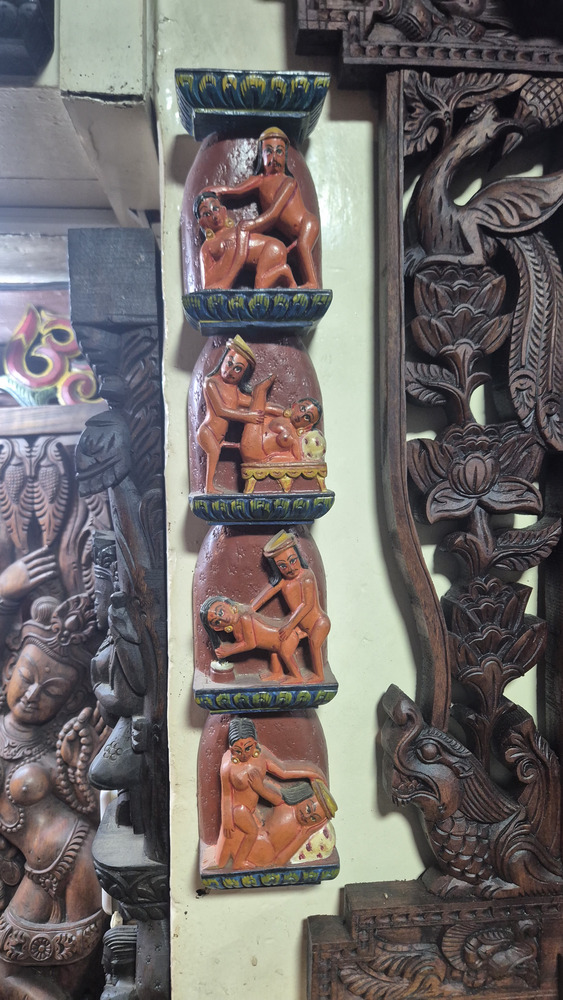
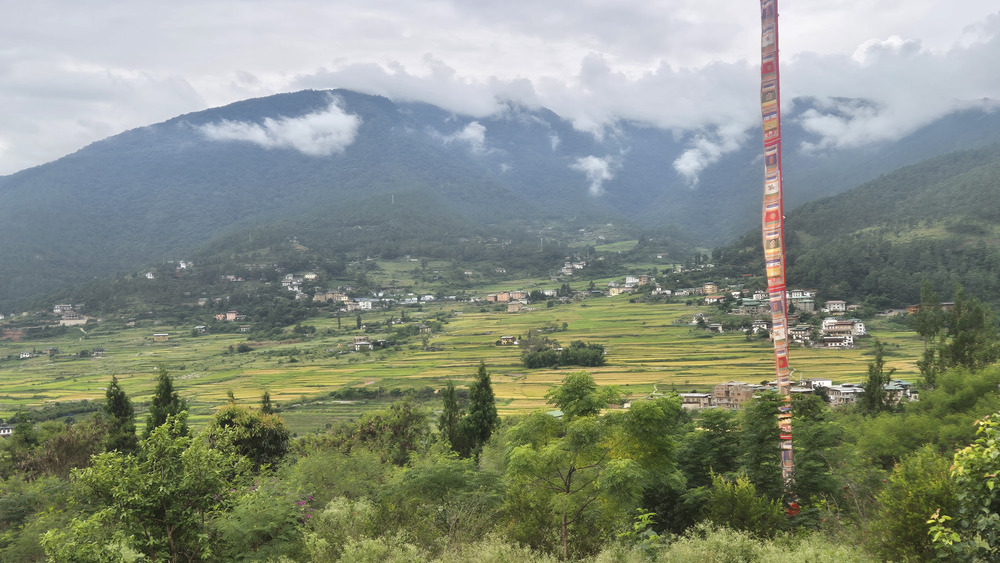
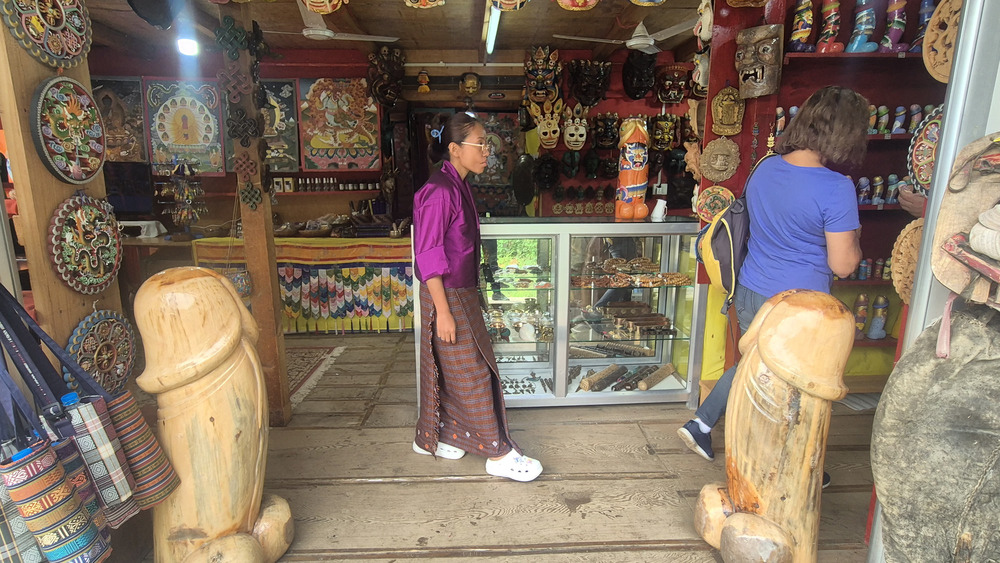
Returning to the resort for a warm breakfast, we began our drive back toward Paro, making a stop in the lush Lobesa Valley to walk across the terraced fields to Chimi Lhakhang. Built in 1499, this hilltop temple is dedicated to Drukpa Kunley—the revered, unconventional folk saint known as the “Divine Madman.” Famous for dispensing blessings of fertility, the temple is an intriguing testament to Bhutan’s unique blend of spiritual devotion, folklore, and whimsical protective art.
We enjoyed an easy afternoon drive across scenic river valleys, pausing for local handicrafts and tea along the way before arriving back in Paro.
Day 4: Pilgrimage to Paro Taktsang (Tiger’s Nest)
A Walk in the Clouds and a Soothing Herbal Bath
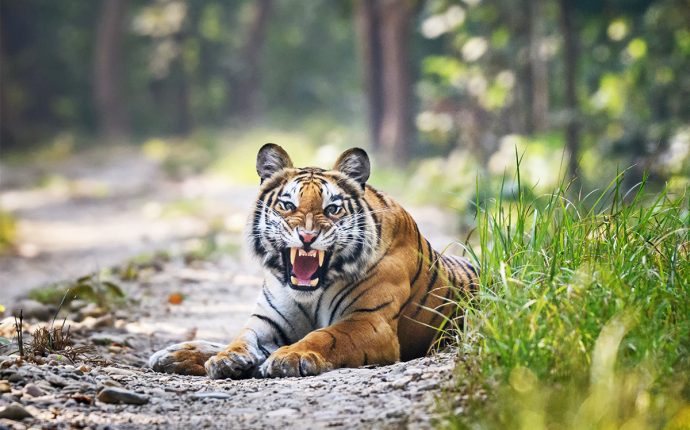
Every Bhutanese journey builds toward the climb to Paro Taktsang (Tiger’s Nest Monastery), clinging dramatically to a sheer granite cliff 900 meters above the valley floor. Legend tells that Guru Rinpoche flew to this cliff face on the back of a tigress in the 8th century, meditating in a cave for three years, three months, and three days to subdue local spirits.
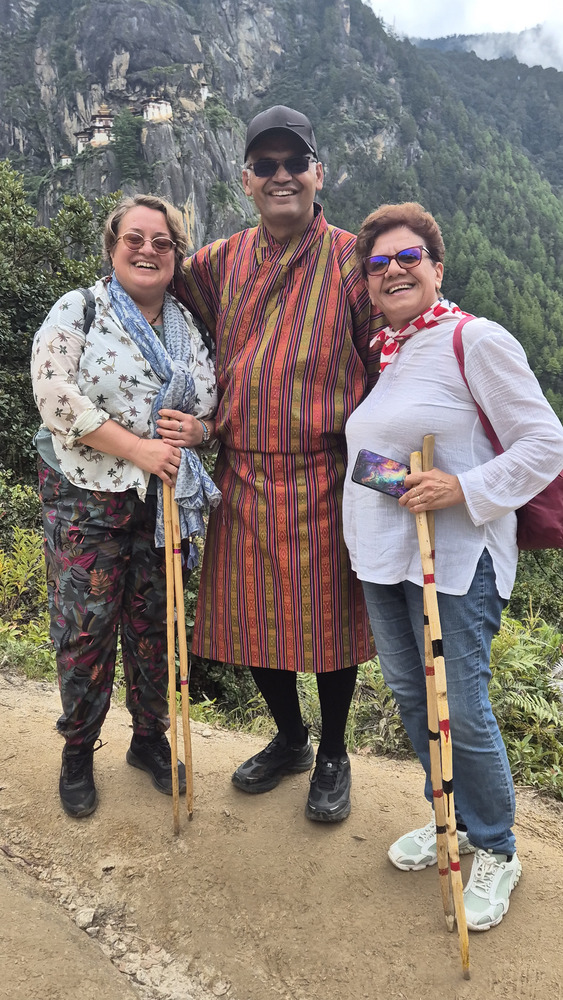
With our 17 travelers moving at different hiking paces, our support structure shone. Alongside our lead coordination, two licensed Bhutanese guides and our dedicated driver provided continuous trail support, carrying extra water and ensuring every guest felt safe and encouraged.
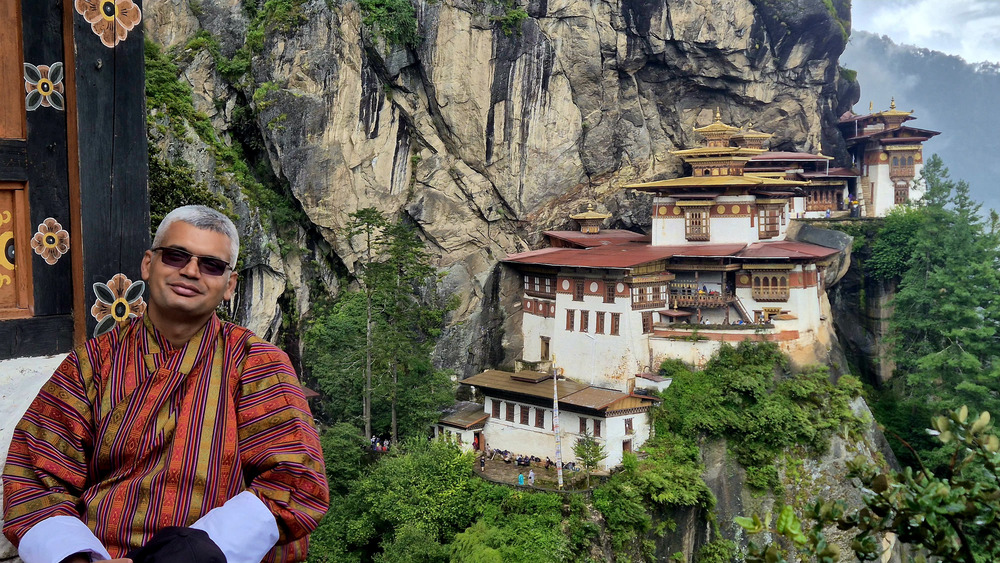
The mountain showed off its classic Himalayan moods. As we climbed through moss-draped blue pines and prayer flag lines, passing clouds and a gentle rain cooled the trail. While three guests opted to take it easy and soak in the vistas from the halfway cafeteria, the rest pushed steadily up to the monastery gate. Stepping inside the cliffside chapels with butter lamps flickering in the quiet rock chambers felt like stepping into another century.
Evening Restoration
After a satisfying four-to-five-hour descent, many in our group treated tired legs to a traditional Dotsho (Bhutanese Hot Stone Bath) at a rustic local farmhouse. River rocks heated over an open wood fire were dropped into a wooden tub infused with wild khempa leaves, releasing rich natural minerals to soothe sore muscles.
Our farewell dinner at Tashi Namgay Resort was full of laughter, camaraderie, and shared photos—celebrating an ambitious, inspiring day of Himalayan trekking.
Day 5: Farewell to the Thunder Dragon
Departing the Valley Gorge to Kathmandu
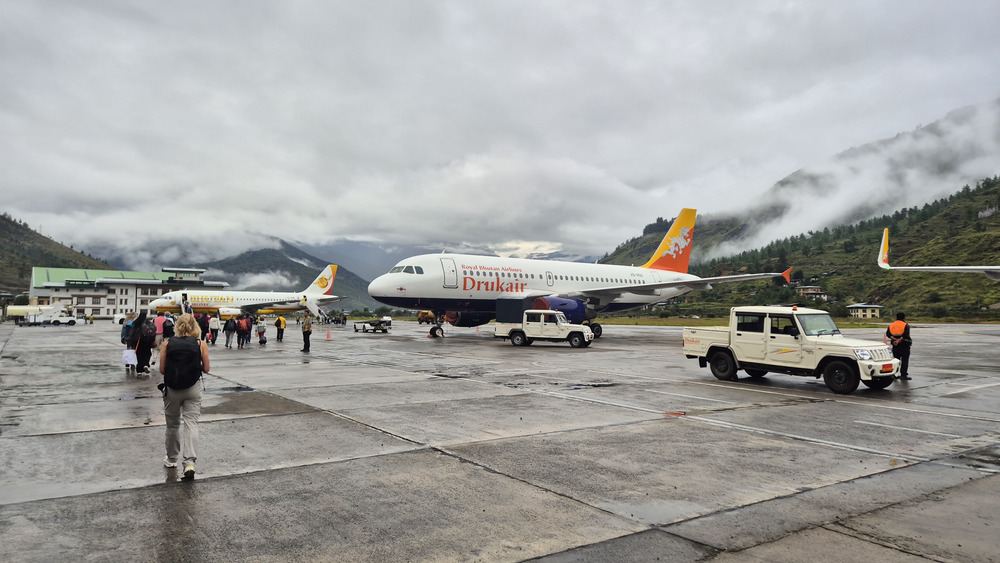
Our departure from Paro Airport was as cinematic as our arrival. Navigating the mountain corridor, the aircraft banked gracefully along the valley walls, climbing through the clouds until it crested the high ridges and leveled out on its path back to Kathmandu.
Looking down one last time at the forested hills, stone dzongs, and terraced slopes, our group returned home with full camera memory cards and even fuller hearts.
Why Timing Matters in Bhutan ?
Visiting Bhutan at any time of year reveals an extraordinary kingdom committed to carbon-negative stewardship, Gross National Happiness, and timeless landscapes. But to travel during a local Tshechu is to witness the kingdom’s living soul. It is when history, spirituality, and community come together in an explosion of color, devotion, and hospitality.
Planning your own Himalayan adventure? Whether you seek festival cultural journeys, scenic valley tours, or remote high-altitude trekking, Good Karma Trekking handles every logistical detail—from boutique accommodations and custom permits to seasoned trail leadership—so you can fully immerse yourself in the journey.