Annapurna Base Camp vs Everest Base Camp: Which Himalayan Trek is Right for You?
Nepal’s two most famous treks—Everest Base Camp (EBC) and Annapurna Base Camp (ABC)—both deliver world-class Himalayan experiences, but they’re surprisingly different adventures. One takes you to the foot of the world’s highest peak through stark, high-altitude terrain; the other winds through lush forests to a natural amphitheater of giants. Choosing between them comes down to your fitness, budget, time, and the kind of experience you crave.
Here’s a complete side-by-side comparison to help you decide.
The Quick Answer
1. Altitude & Difficulty: The Deciding Factor
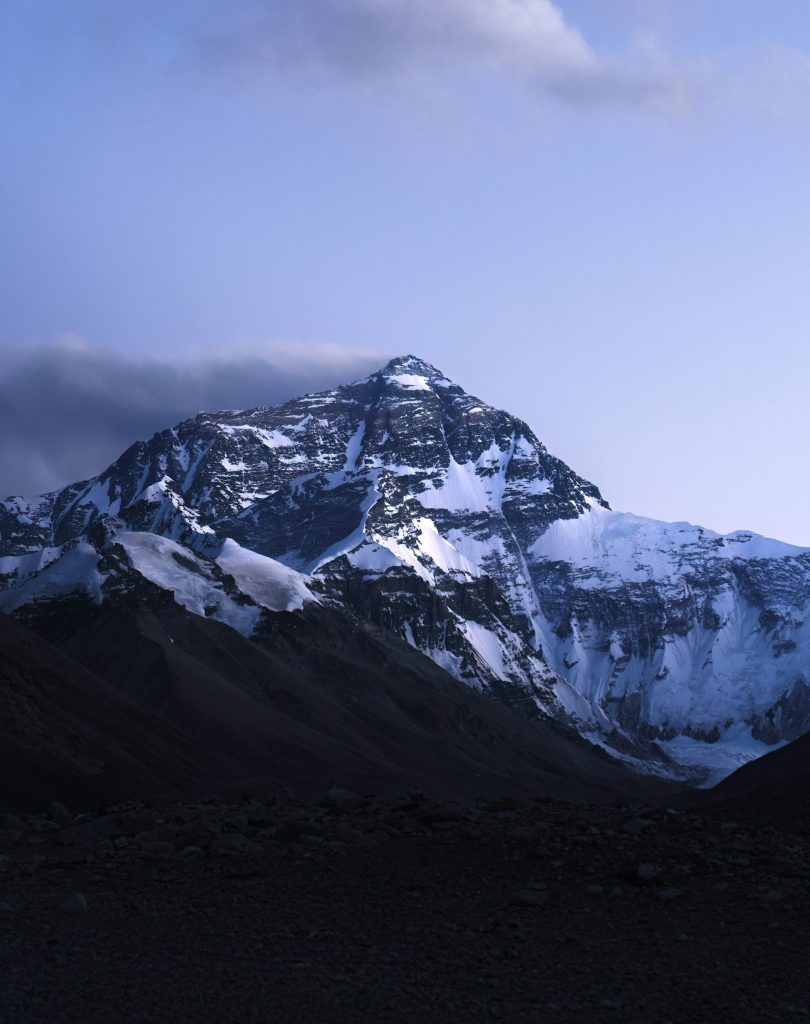
Altitude is the single biggest differentiator between these two treks.
Everest Base Camp is a true high-altitude challenge. At its highest point, Kala Patthar (5,545m), you’re above the altitude where most people can acclimatize without issues. The air has roughly half the oxygen it does at sea level, making every step a struggle and significantly increasing the risk of Acute Mountain Sickness (AMS) . It requires mandatory acclimatization days to safely ascend and should not be rushed .
Annapurna Base Camp, by contrast, tops out at a more manageable 4,130m. While you’ll still feel the effects of altitude, the risk is considerably lower and the ascent is more gradual, making it far more accessible to first-time trekkers or those unsure how their body will react to altitude .
Acclimatization Requirements
- EBC: 2-3 built-in acclimatization days (at Namche Bazaar and Dingboche) are mandatory, and the minimum safe duration is 12 days .
- ABC: An optional rest day may be recommended, but fit trekkers can often complete the route safely in 10 days with a gradual ascent .
2. Scenery & Cultural Experience: Two Different Worlds

The landscapes and cultural highlights of these treks are remarkably different.
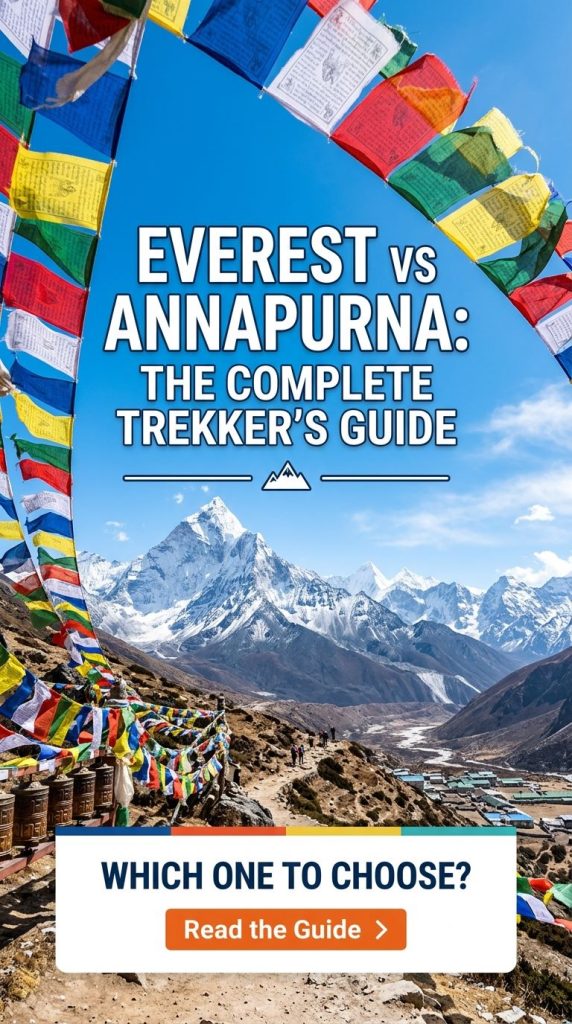
Everest Base Camp is a journey into a high-altitude desert. The trail is rocky and sparse, offering unobstructed views of the world’s highest peaks, including Everest, Lhotse, Nuptse, and the iconic Ama Dablam . The culture is deeply rooted in Tibetan Buddhism, with ancient monasteries (like Tengboche), prayer flags, and the proud Sherpa people dominating the region .
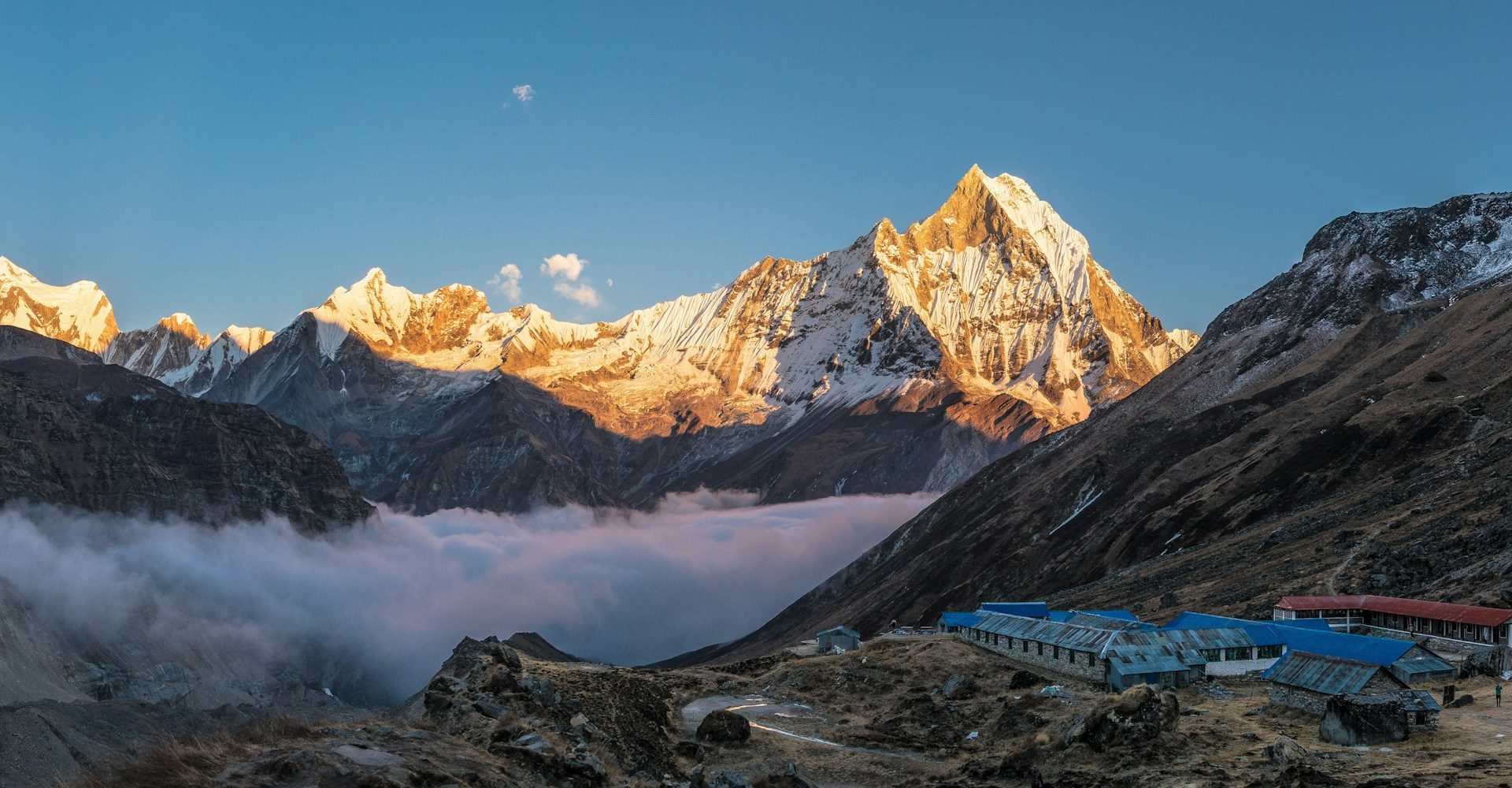
Annapurna Base Camp, by contrast, is a trek through dramatic ecological diversity. You start in subtropical forests and terraced farmland before climbing through lush, flower-filled rhododendron forests (spectacular in spring) and finally entering the Annapurna Sanctuary—a natural amphitheater ringed by peaks like the sacred Machhapuchhare (Fishtail) and the towering Annapurna massif . Culturally, you’ll experience the traditions of Gurung and Magar communities .
Scenery & Culture Highlights
3. Cost: The Budget Factor
Cost is another major differentiator, and EBC is consistently 30-50% more expensive than ABC . The main reason is the mandatory flight to Lukla, which alone can cost between $215 and $400 round-trip . Furthermore, the EBC region is more remote, and the cost of food and lodging increases significantly with altitude .
Cost Comparison Estimate (per person)
| Cost Element | ABC | EBC |
|---|---|---|
| Internal Flights | None | $350-400 (Kathmandu-Lukla) |
| Total (Independent) | $500 – $900 | $900 – $1,500 |
| Total (Guided Package) | $1,200 – $2,500 | $1,500 – $4,000+ |
| Daily on Trail | $30 – $40 | $45 – $60 |
ABC is far more budget-friendly. The journey starts with a drive or short, cheap flight to Pokhara and then a drive to the trailhead, providing substantial savings. For budget-conscious trekkers, ABC delivers incredible value .
4. Logistics, Permits & Access
Everest Base Camp logistics are more complex. The trailhead at Lukla is only accessible by a short but notoriously unpredictable flight. Weather delays are common, so it’s wise to build buffer days into your schedule . As of 2023, it is a legal requirement for trekkers in the Everest region to be accompanied by a licensed guide .
Annapurna Base Camp is much easier to access. Most trekkers drive from Kathmandu to Pokhara and then take a short drive to the trailhead, avoiding the cost and anxiety of a high-risk domestic flight .
Permits Required
- EBC: Sagarmatha National Park Permit ($25-30) + Khumbu Pasang Lhamu Rural Municipality Permit ($15-20) + TIMS Card ($15) .
- ABC: Annapurna Conservation Area Permit (ACAP) (~$30) + TIMS Card ($15-20) .
5. Best Time to Trek
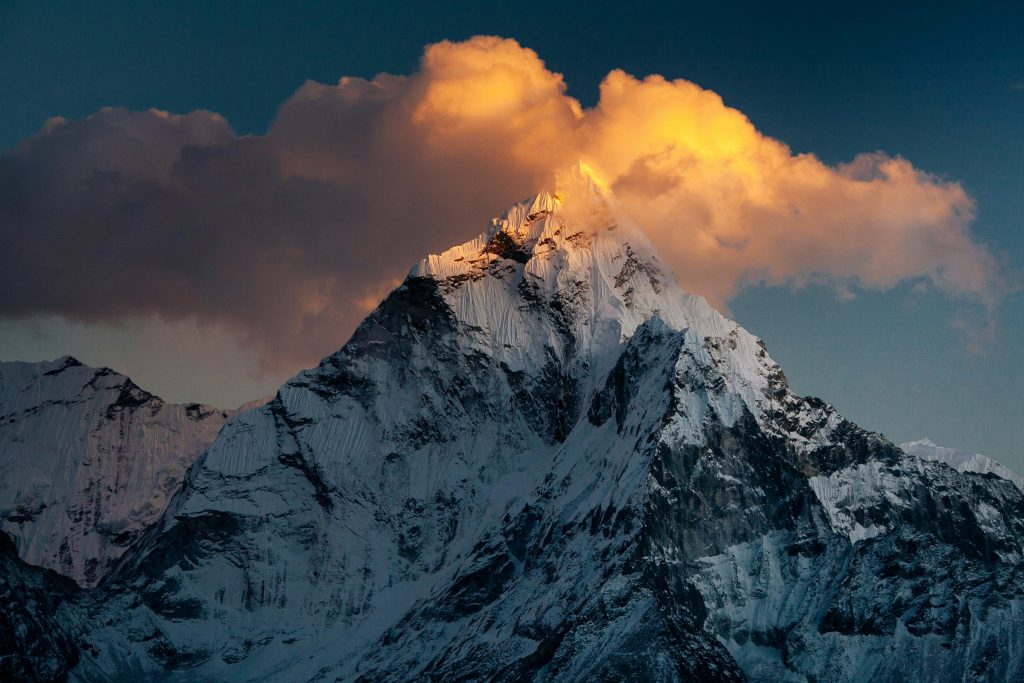
Both treks share the same ideal seasons, but conditions differ slightly.
- Spring (March–May): Excellent weather and clear skies, with the added spectacle of blooming rhododendrons (especially on the ABC trail). It’s also the busiest time on the EBC trail, as mountaineers gather for summit attempts .
- Autumn (September–November): The most stable weather with crisp, clear views. This is the peak season for both treks, so expect trails to be busy . Read more about Trekking Nepal in November.
- Winter (December–February): Cold and quiet. EBC temperatures can drop to -15°C, making the trek challenging but offering near-empty trails .
- Monsoon (June–August): Heavy rain and limited visibility make it the least ideal time. ABC trails can be slippery and leech-infested, while EBC is partly in a rain shadow .
Conclusion: Which Trek is For You?
Both treks are incredible journeys, but they cater to different adventurers. There is no “wrong” choice—only the one that best fits your personal goals.
Choose Everest Base Camp if you:
- Dream of standing beneath the world’s highest mountain.
- Have at least 14 days and a flexible budget.
- Are comfortable with high altitude and the risks of AMS.
- Want an iconic, bucket-list adventure and are drawn to Sherpa culture and the ultimate mountaineering aura .
Choose Annapurna Base Camp if you:
- Are a first-time high-altitude trekker or on a tighter budget.
- Only have 7-10 days.
- Prefer a diverse landscape with lush forests and dramatic mountain amphitheaters.
- Want a moderate challenge with lower altitude risk and better value for money .
Whichever path you choose, you’re in for an unforgettable adventure in the heart of the Himalayas. Happy trekking!